The Ultimate Guide to Active Recall: 15 Proven Techniques to Remember Everything You Study
Stop forgetting what you study. Unlock 15 powerful active recall techniques and proven flashcard strategies to master any subject and boost your memory for good.
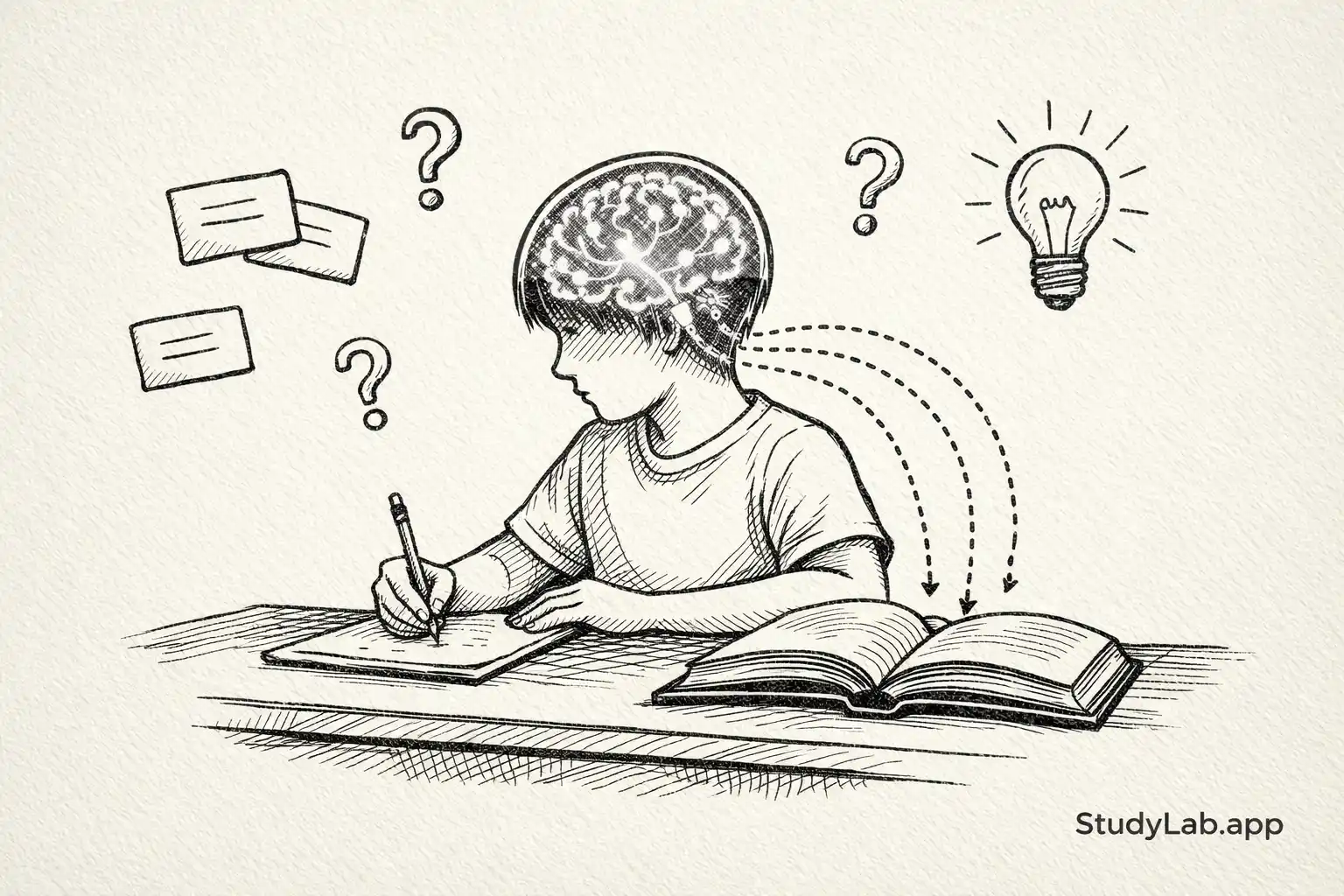
Ever spent hours highlighting textbooks, only to blank out during the exam? You're not alone. Research from Washington University found that students who used passive study methods (like rereading) remembered only 40% of material after a week, while those using active recall techniques retained nearly 80%. That's not a small difference; it's the gap between passing and failing.
Here's the thing: your brain doesn't learn by absorbing information passively. It learns by retrieving it. Every time you force yourself to recall something from memory, you're strengthening the neural pathways that make that information stick. Think of it like a trail through the woods. The more you walk it, the clearer and easier it becomes to follow.
In this guide, I'll walk you through 15 proven active recall techniques that actually work. Whether you're cramming for finals, preparing for a professional certification, or just trying to remember what you learned in last week's lecture, these memory techniques will transform how you study.
What Is Active Recall and Why Does It Work So Well?
Active recall is exactly what it sounds like: actively stimulating your memory during the learning process. Instead of passively reviewing notes, you're forcing your brain to retrieve information from scratch. It's the difference between recognizing an answer when you see it and actually producing that answer yourself.
Why is this so effective? Cognitive scientists call it the "testing effect." When you attempt to recall information, your brain treats it as important and strengthens the memory trace. A 2011 study published in Science found that students who practiced retrieval remembered 50% more information a week later compared to those who just re-studied the material.
The beautiful part? Active recall doesn't require more study time. It requires different study time. You can actually study less while remembering more. Sounds like a good deal, right?
The Foundation: 5 Essential Active Recall Techniques for Beginners
1. The Blank Page Method
This one's my personal favorite because it's dead simple. After reading a chapter or attending a lecture, close everything. Grab a blank sheet of paper. Now write down everything you can remember without looking at your notes.
Don't worry about organization or getting everything perfect. Just dump whatever comes to mind. When you're done, open your notes and see what you missed. Those gaps? That's exactly what you need to focus on next.
Pro tip: Use different colored pens. Write what you remembered confidently in blue, what you were unsure about in green, and add what you missed in red. This creates a visual map of your knowledge gaps.
2. Question-Based Note Taking
Instead of writing statements like "The mitochondria is the powerhouse of the cell," flip it into a question: "What organelle produces ATP in cellular respiration?" This transforms your notes into a built-in study tool.
I've found that students who convert their notes into questions while taking them (not after) retain information significantly better. You're essentially creating a personalized quiz as you learn.
3. The 2-3-5-7 Technique
Here's a simple flashcard strategy that prevents the forgetting curve from stealing your hard work:
- Review new material after 2 days
- Review again after 3 more days
- Review again after 5 more days
- Review again after 7 more days
By day 17, that information is pretty much locked in. The spacing gets progressively longer because your memory grows stronger with each successful recall.
4. Teach an Imaginary Student
Pretend you have to explain what you just learned to a younger sibling or a friend who knows nothing about the topic. This forces you to recall information, identify gaps in your understanding, and organize concepts in a logical way.
Can't explain something simply? That's a red flag that you don't truly understand it yet. Richard Feynman, the Nobel Prize-winning physicist, swore by this technique. If it's good enough for a genius, it's good enough for us.
5. Closed-Book Practice Problems
This seems obvious, but you'd be surprised how many students "practice" problems with their notes open. That's not practice; that's just copying with extra steps.
Close the book. Attempt the problem. Struggle with it. Then check your work. The struggle is where the learning happens.
Intermediate Active Recall Methods: Taking It Up a Notch
6. Spaced Repetition Systems (SRS)
Spaced repetition takes flashcard strategies to the next level by using algorithms to determine the optimal time to review each card. Cards you struggle with appear more frequently; cards you know well show up less often.
Apps like Anki are popular for this, but here's something even better: tools like StudyLab.app can automatically generate quiz questions from your study materials. Upload your PDF, and you've got a personalized active recall system without spending hours making flashcards manually.
7. The Cornell Method with Recall Column
You've probably heard of Cornell notes, but most people skip the crucial recall step. The left column isn't just for keywords; it's for questions that you should be able to answer by covering the right side.
After each study session, fold your paper so only the question column shows. Test yourself. This transforms passive notes into an active study tool.
8. Interleaved Practice
Instead of practicing one type of problem until you've "got it," mix different types together. Studying calculus? Don't do 20 integration problems in a row. Do 5 integration problems, then 5 derivatives, then 5 limits, then mix them all together.
This feels harder (and it is), but research shows interleaved practice leads to 43% better long-term retention compared to blocked practice. Your brain has to work harder to identify which strategy applies, which deepens understanding.
9. Elaborative Interrogation
For every fact you learn, ask yourself "Why?" and "How?" If you're studying history and learn that the Roman Empire fell in 476 AD, ask yourself: Why did it fall? How did different factors contribute? What were the consequences?
This forces you to connect new information with existing knowledge, creating more retrieval pathways. The more connections, the easier it is to recall.
10. The Leitner System
This classic flashcard method uses multiple boxes to organize cards by difficulty:
- Box 1: New cards, review daily
- Box 2: Cards you got right once, review every 2 days
- Box 3: Cards you've gotten right twice, review weekly
- Box 4: Cards you know well, review monthly
Get a card wrong? It goes back to Box 1. This ensures you spend time where you actually need it.
Advanced Memory Techniques for Serious Students
11. Retrieval-Based Mind Mapping
Create a mind map from memory. Start with the central concept and branch out with everything you can recall. Don't peek at your notes until you've exhausted your memory.
The act of deciding how concepts connect forces deeper processing than passive review ever could. Plus, you'll quickly see which branches are sparse (hint: study those).
12. The Generation Effect
Before learning something new, try to generate the answer yourself. Even if you're wrong, the attempt primes your brain to pay attention to the correct answer when you encounter it.
For example, before reading about the causes of World War I, brainstorm what you think they might be. When you then read the actual causes, your brain is already engaged and actively comparing your guesses to reality.
13. Dual Coding with Self-Testing
Combine verbal and visual retrieval. After studying a concept, try to recall it in two ways: explain it in words AND draw a diagram or visual representation. This creates multiple memory pathways and significantly improves recall.
Medical students use this technique constantly. They'll describe a body system verbally while sketching it from memory. Both attempts strengthen different but complementary memory traces.
14. Contextual Variation Practice
Study the same material in different contexts, at different times, and in different ways. If you always study in your bedroom with coffee at 8 PM, try the library with tea at 2 PM sometimes.
This might seem counterintuitive, but memories encoded in varied contexts become more flexible and easier to access in new situations, like an exam room you've never been in before.
15. Free Recall Journaling
At the end of each day, spend 10 minutes writing everything you remember learning. No structure, no organization, just a brain dump. What did you learn in class? What did you read? What stuck?
This daily practice accomplishes two things: it forces retrieval of the day's material, and it helps you identify patterns in what you're forgetting. Over time, you'll notice which types of information slip away and can adjust your study methods accordingly.
Putting It All Together: Your Active Recall Action Plan
Here's the deal: you don't need to use all 15 techniques. That would be overwhelming and counterproductive. Instead, pick 2 or 3 that fit your study style and commit to them.
If you're just starting out, try the Blank Page Method and Question-Based Note Taking. These require no special tools and can be implemented immediately.
If you want to automate some of the heavy lifting, consider using StudyLab.app to convert your study materials into interactive quizzes. It's like having a study partner who never gets tired of asking you questions. You upload your PDFs, and the AI generates multiple choice, fill-in-the-blank, and true/false questions automatically. That's active recall without the setup time.
Key takeaways:
- Active recall works because retrieval strengthens memory traces (the testing effect)
- Start simple with techniques like the Blank Page Method before advancing to spaced repetition systems
- Consistency beats intensity; 20 minutes of daily active recall outperforms 3-hour weekly cram sessions
- Use technology to your advantage, but don't let app setup become a procrastination tool
The students who succeed aren't necessarily smarter. They're the ones who figured out that studying less with the right study methods beats studying more with the wrong ones. Active recall is the difference between knowing material for the exam and knowing it for life.
So close this article, grab a blank sheet of paper, and write down everything you just learned. Your future self will thank you.