Dopamine Detox for Studying: What the Trend Gets Wrong (and What Actually Works)
The viral dopamine detox misreads how your brain works. Here is the honest version, what the science actually says, and what to do instead to focus while studying.
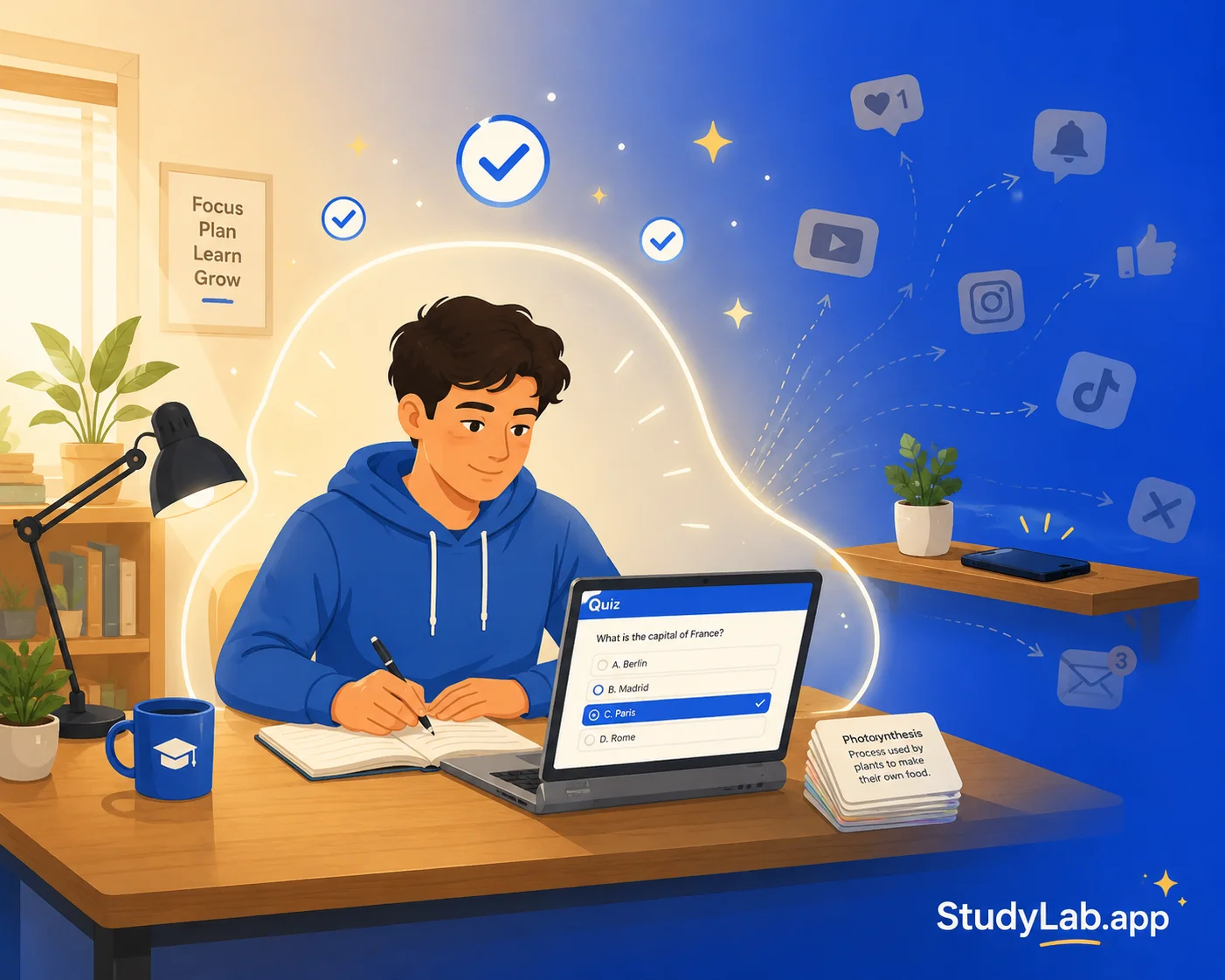
You've probably seen the videos. Someone sits in a dark room for 24 hours. No phone, no music, no good food, no talking to anyone. They call it a "dopamine detox," and they swear that afterward their focus is reborn and studying feels effortless. Then you try it, last about ninety minutes, and feel worse. Sound familiar?
Here's the honest version. A dopamine detox, at least the way it's sold online, is based on a real misunderstanding of how your brain works. But there's a smaller, boring, evidence-backed idea buried under the hype that actually helps your focus. This post separates the two, so you can stop wasting weekends staring at a wall and start doing the thing that works.
What is a dopamine detox, really?
The term comes from a 2019 framework by Dr. Cameron Sepah, a clinical psychologist and professor of psychiatry at UCSF. He called it "Dopamine Fasting 2.0," and it was never about draining dopamine from your brain. It was a cognitive behavioral therapy technique for one specific goal. Get a grip on compulsive behaviors by scheduling short, deliberate breaks from them.
Sepah picked out a handful of behaviors that tend to hook people, things like endless social media, gaming, and emotional eating. The plan was to step back from one or two of them for a set window, then return with more control. That's it. It's a standard behavior-change tool with a catchy name.
And Sepah has said the name is basically marketing. He told the New York Times that dopamine "makes for a catchy title" and that it isn't meant to be taken literally. The internet ignored that part. The version that went viral turned a simple stimulus-control exercise into a monk-like fast from all pleasure, which was never the idea.
Can you actually reset your dopamine?
No. This is the part the trend gets backwards.
Dopamine isn't a tank that fills up when you scroll and drains when you rest. It's a neurotransmitter your brain produces all the time, and it's involved in movement, learning, and motivation. It's closer to a "keep going, this is worth it" signal than a pleasure meter. You can't fast from it any more than you can fast from your own heartbeat.
When you put your phone down for a day, you don't lower your dopamine. You lower the stimulation. Those are different things. One neuroscientist called the idea that a short break "resets" your brain chemistry nonsense. Harvard physician Peter Grinspoon made a similar point. The sensible core of Sepah's idea is fine, but the extreme dark-room versions are a misreading that can do more harm than good.
So if someone promises that 24 hours of misery will rewire your motivation, they're selling you faulty neuroscience. The good news is that the thing underneath actually does work, and it's a lot easier than sitting in the dark.
What actually works for your focus
Skip the detox framing. What you want is stimulus control, the real technique Sepah's method was built on. Pick the one behavior that eats your study time (for most students, it's the phone) and restrict it to set windows instead of trying to purge every pleasure at once.
The evidence for this is strong. In a 2025 study published in PNAS Nexus, researchers had people block mobile internet on their phones for two weeks. The results were hard to ignore. Sustained attention improved by an amount the researchers compared to reversing ten years of age-related decline. Mental health improved more than the typical effect of antidepressants. Around 91% of people got better on at least one measure. And it wasn't magic chemistry. When the phone stopped interrupting them, they slept more, moved more, and spent more time with actual humans.
You don't need to block the internet for two weeks to borrow the principle. Try this instead:
- Put your phone in another room during study blocks, not just face-down on the desk
- Pick set windows for the compulsive habit ("I check messages at 12, 4, and 8, not in between")
- Replace, don't just remove. A blank study block invites the phone right back in.
That last point matters most for studying. Removing the distraction only gets you to the desk. What you do there still has to be active recall, not passive scrolling through your notes. One easy way to give the block a real job is to turn your notes into a quick quiz and test yourself. If prepping questions is the friction that sends you back to your phone, StudyLab can generate one from your PDF in seconds.
This pairs well with structure. Running the Pomodoro Technique gives the phone-free window a clear start and end. And if you keep losing the same battle at the same time every day, temptation bundling lets you pair the study block with a small reward so it stops feeling like punishment.
What to skip
The 24-hour dark-room version. It's built on the wrong science, it's miserable, and the "cleaner focus" people report is mostly the relief of a break plus a strong placebo. You don't need to give up food, music, exercise, or friends. Those are the healthy activities that are supposed to replace the compulsive ones, not more things to quit.
Skip the all-or-nothing mindset too. If you slip and check your phone, that's data, not failure. Note when it happened and adjust the window. The students who stick with this treat it like beating procrastination in general. Small, repeatable wins, not one heroic weekend.
FAQ
Does a dopamine detox actually work?
The viral version (avoid all pleasure to reset your brain) doesn't, because you can't reset dopamine that way. The original version (restrict one compulsive behavior to set times) does work, for ordinary behavioral reasons. It's stimulus control, not brain chemistry.
Can you lower your dopamine by abstaining from things you enjoy?
No. Dopamine is always active in your brain. Cutting out social media or sugar reduces the stimulation, not your dopamine levels. The "empty the tank" model isn't how the neurotransmitter works.
How long should a dopamine detox be for studying?
Forget the 24-hour version. For studying, think in study-block windows: 25 to 50 minutes phone-free, repeated daily. Consistency beats one dramatic day. The research on longer digital breaks of a week or two shows the biggest gains, but even short daily windows help.
Is a dopamine detox good for focus while studying?
The honest version is. Removing your biggest distraction for set windows improves attention in real studies. Just pair it with an actual study task, because an empty, phone-free block tends to fill itself back up.
What should I do instead of a dopamine detox?
Pick your worst distraction, put it out of reach during study windows, and give the block a concrete job like a practice quiz. That's the evidence-backed core of the whole trend, minus the bad science.
Stop detoxing, start focusing
You don't need a dark room or a lost weekend. Pick the one habit that steals your focus, put it in another room for your next study block, and fill that block with real practice instead of re-reading. If the friction is making the study material, upload your notes to StudyLab and let it build a quiz, so your phone-free block has something better to do than tempt you back.