The Fresh Start Effect: Why a New Semester Is the Best Time to Fix How You Study
Research shows motivation genuinely spikes at temporal landmarks like the start of a semester. Here is how to use the fresh start effect to build a study system in week one, before the workload arrives.
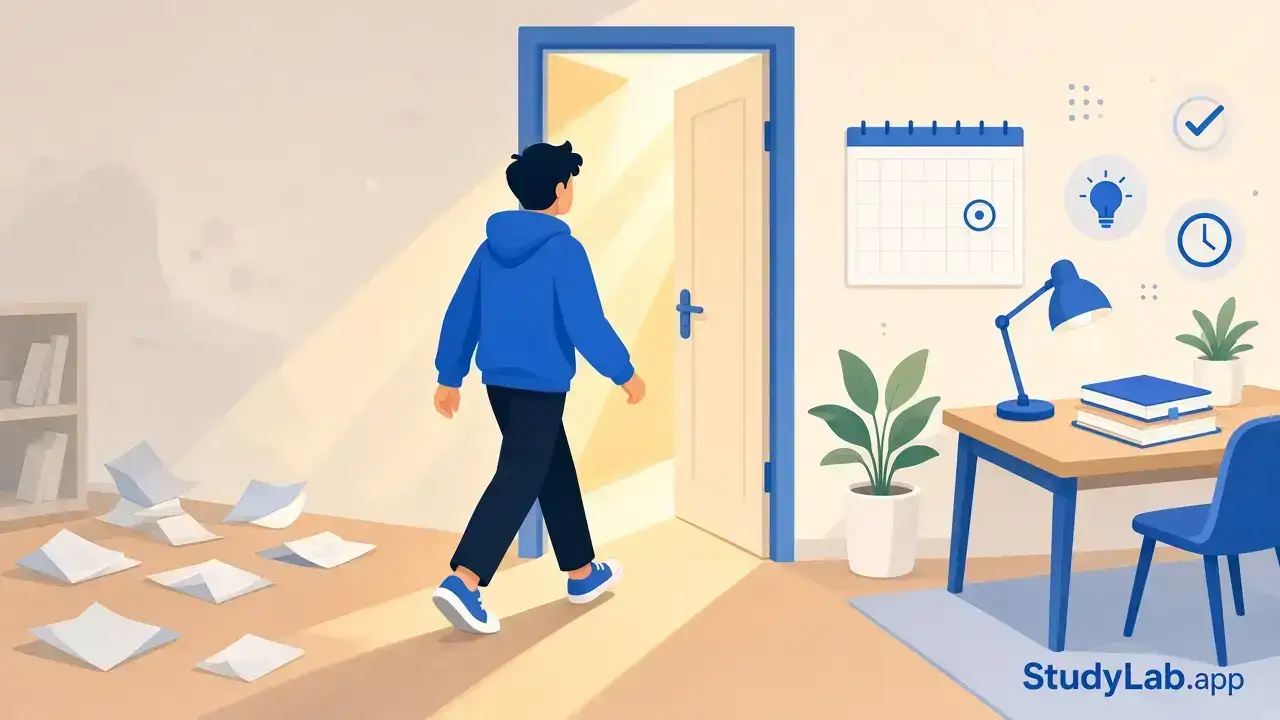
There's a reason you feel weirdly optimistic during the first week of a semester. New notebooks, empty calendar, a version of you that goes to every lecture and never crams. By November that person is gone, and you're bargaining with yourself at 1 am before a midterm.
Here's what most students don't know. That first-week optimism is a documented psychological effect, it's measurable, and it has an expiry date. Researchers call it the fresh start effect. Used deliberately, it's the cheapest motivation you'll get all year. Wasted, it's just a nice feeling that fades by week three.
This post covers what the research actually found, and a concrete first-week setup that turns the feeling into a system before your workload shows up to ruin everything.
The science of fresh starts
In 2014, researchers Hengchen Dai, Katherine Milkman and Jason Riis published a study in Management Science with a simple question. Do people pursue their goals more at certain points in the calendar?
They looked at three real-world datasets. Google searches for "diet" spiked at the start of new weeks, months and years. Gym visits at a university jumped after temporal landmarks, and one of the landmarks they measured was the start of a new semester. Commitments on a goal-setting website followed the same pattern.
Their explanation is that dates like these act as mental bookmarks. A new semester closes the account on the old you. The version of you who skipped lectures last spring belongs to a previous chapter, so trying again doesn't feel like failing again. It feels like starting.
Two things follow from this, and both matter.
First, your motivation this week is real, not naive. You should trust it. Second, the same research found the boost fades. Gym attendance drifted back down as the semester wore on. So the goal of week one isn't to study hard. It's to install a system that keeps working after the motivation is gone.
The first-week setup
Five steps. Doing all of them takes an afternoon, and every one of them gets harder the longer you wait.
1. Do a syllabus sweep into one calendar
Sit down with every syllabus and pull out each exam, quiz, paper deadline and problem set into one place. Google Calendar, a paper planner, whatever you'll actually look at. One place, not four.
While you're there, work backwards from each exam and block a start date for studying, two weeks out for midterms, more for finals. Future you doesn't discover an exam on Tuesday for Thursday. Future you sees it coming from week two, because present you spent forty minutes on a Sunday. This one step prevents more bad weeks than everything else combined, and if you want to go deeper, our time management guide covers how to keep the calendar honest all semester.
2. Pick your daily anchor slot
Choose one recurring block, 45 to 90 minutes, at the same time every weekday. After your last class, before dinner, first thing with coffee. The time matters less than the sameness.
Why so rigid? Because "I'll study when I have time" is how nobody studies. A fixed slot removes the daily decision, and decisions are exactly what fade when motivation does. Structure the block with Pomodoro sessions so it has a shape, not just a duration.
3. Start retrieval from day one, not from midterms
The default student rhythm is passive all semester, frantic before exams. Reading, highlighting, rewatching lectures, then trying to force it all in during exam week.
Flip it now, while the material is still easy. At the end of each week, close your notes and test yourself on that week's lectures. Write what you remember, answer practice questions, explain concepts out loud. Testing yourself beats rereading by a wide margin, and if you build the habit in week one when there's barely anything to test, it costs you twenty minutes. Build it in week eight and it competes with three assignments.
This is also where a tool genuinely helps. Upload your lecture notes or slides to StudyLab at the end of each week and it generates practice questions from them, so the weekly self-test happens even in weeks when you'd never sit down and write questions yourself. Pair it with a spaced repetition schedule and the material from week one is still alive in your head at finals.
4. Write if-then plans for your two failure points
You already know how your semesters fall apart. Skipped 8 ams? Phone in bed? Assignments started the night before? Pick your top two and write an if-then plan for each. "If it's 6 pm on Sunday, then I do the syllabus review at my desk." "If I open TikTok during a study block, then the phone goes in my bag until the timer rings."
It sounds almost too basic. But implementation intentions are one of the better-supported tricks in behavioral science, and they exist precisely for the moment when the fresh-start glow is gone.
5. Book a weekly reset
Fifteen minutes, same time each weekend. Look at the calendar, check what's due, adjust the week's blocks. Miss this and the system quietly decays. Keep it and every Sunday is a tiny fresh start of its own, which is exactly how you keep the effect running past September. The researchers found weekly landmarks work too, just more gently than semester ones.
What this looks like on a Tuesday in October
The point of all this is boring. That's the feature.
You get out of your last class and your anchor slot starts at 4. You already know what's due because the calendar told you Sunday. You run two Pomodoros on the problem set, one on this week's flashcards. Your phone is in your bag because that's the rule when the timer runs. At no point did you need to feel motivated.
The students who look effortlessly consistent in November aren't more disciplined than you. They just did the setup in a week when it was easy.
Mistakes that waste the fresh start
- Spending week one reorganizing instead of installing. A color-coded Notion you abandon by October isn't a system. Five simple pieces you keep beats a beautiful dashboard you don't.
- Going too hard. Four-hour library marathons in week one burn the motivation the research says you'll need to ration. Set the sustainable pace now.
- Waiting for the "real" work to start. The weeks with light material exist so the habits are automatic before the heavy ones hit.
- Missing once and declaring it over. The fresh start effect works on Mondays too. One skipped slot is data, not proof the semester is ruined.
FAQ
What is the fresh start effect in simple terms?
It's the documented tendency for people to pursue goals more after dates that feel like new beginnings, like a new year, a birthday, or a new semester. A 2014 study found gym visits, diet searches and goal commitments all spiked after these temporal landmarks.
Does the fresh start effect actually last?
No, and that's the point of planning around it. The same research showed the motivation boost fades over time. The first week is for installing systems that don't depend on motivation, not for heroic study sessions.
What if my semester already started weeks ago?
Use the next landmark. The research found effects at the start of ordinary weeks and months too, just weaker than big landmarks. Next Monday works fine. So does the day after your first midterm, which is a natural chapter break.
How many hours should I study in the first week?
Fewer than you think. The goal is installing the anchor slot, the calendar, and the weekly self-test at a pace you can hold in week ten. For most students that's an hour a day plus one setup afternoon.
Use the window while it's open
Right now, changing how you study feels easy. In six weeks, the exact same changes will feel like one more obligation. That gap is the fresh start effect, and it's closing a little every day.
So spend one afternoon this week. Sweep the syllabi, pick the anchor slot, write the two if-then plans, book the Sunday reset. Then let the weekly self-test do the heavy lifting all semester. If you want that part running by tonight, upload this week's notes to StudyLab and take your first quiz while the semester is still young.